Summiting Mount Vinson: Ice, Biscuits, and the Final Frontier
Updated: Apr 1
There are mountains… and then there’s Mount Vinson.
There’s no such thing as easing in gently when it comes to Antarctica. It drops you into a white-on-white world where distance lies in plain sight, the silence roars, and your own heartbeat sounds like a bongo drum, and everything feels slightly surreal, including the fact that you’re about to attempt the final summit of the Seven Summits.
Pierre’s journey began in Punta Arenas, a rugged town at the edge of the world that turns out to be more cowboy than shipping port. Horse farms and cattle ranches line the outskirts, and expedition groups go to and fro on their way south.
From here, it was into the hands of Antarctica Logistics Expeditions — the crew who make sure you don’t accidentally wander into a crevasse or leave so much as a biscuit crumb behind.
What Pierre didn’t expect, but in hindsight is understandable, is that Antarctica runs on rules. And lots of them.
Before you even touch the ice, you sit through briefings on environmental protection, toilet protocol (everything comes back out with you), and how not to die. It feels over-policed at first, until you realise this place is so pristine, so utterly lifeless, that even bacteria struggle to survive.
Walk away from camp, and there is nothing. No birds. No insects. No rustle of grass. Just your breath and the quiet cracking of ice somewhere far below.
And cold. Proper cold. The kind that makes you respect every zipper and glove seam (and an electrically charged nose warmer — yes, those exist).



Luxury on Two Kilometres of Ice
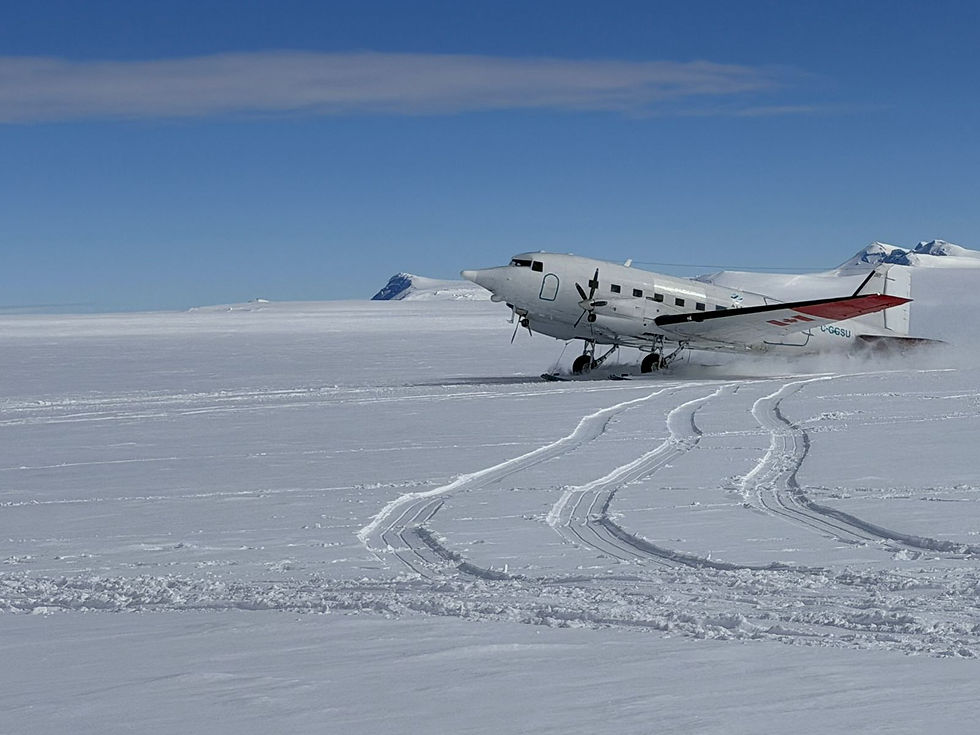
Landing on the ice is an otherworldly sensation. You step off the plane, slide around in your boots, then pile into six-wheel drive monster trucks that look like something Top Gear forgot to destroy.
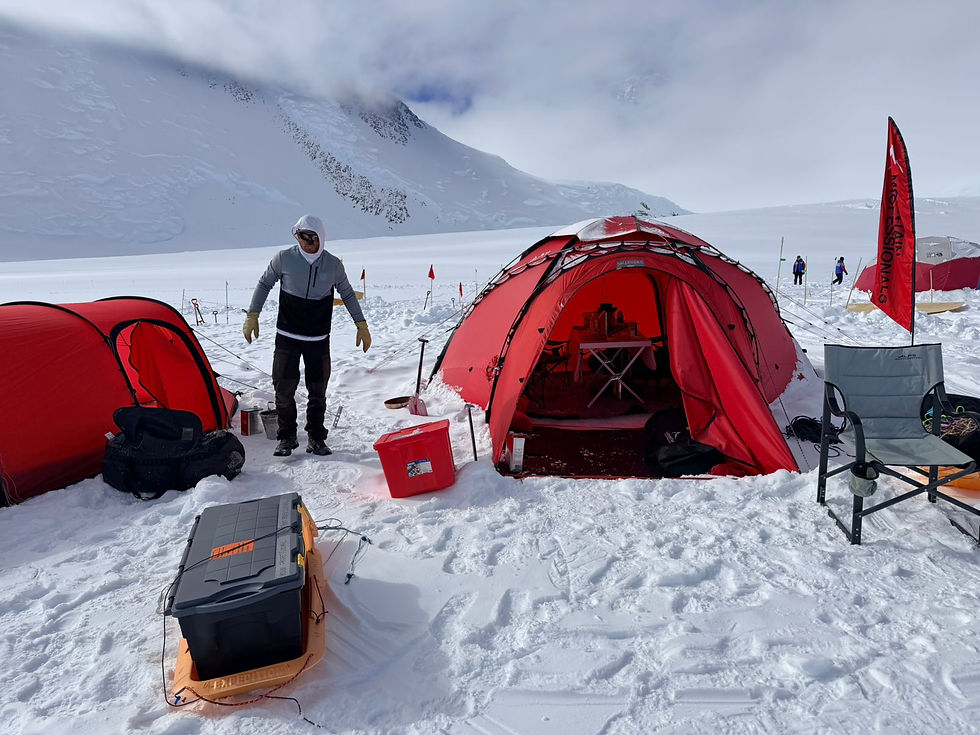
Base camp feels strangely luxurious with mess tents, hot meals, endless tea (Pierre was happy), biscuits on tap, and even hot showers.
Basically, you’re standing on two kilometres of solid ice, holding and locking away 80% of the world’s fresh water, but somehow still drinking hot chocolate as you warm your bum from the heater.
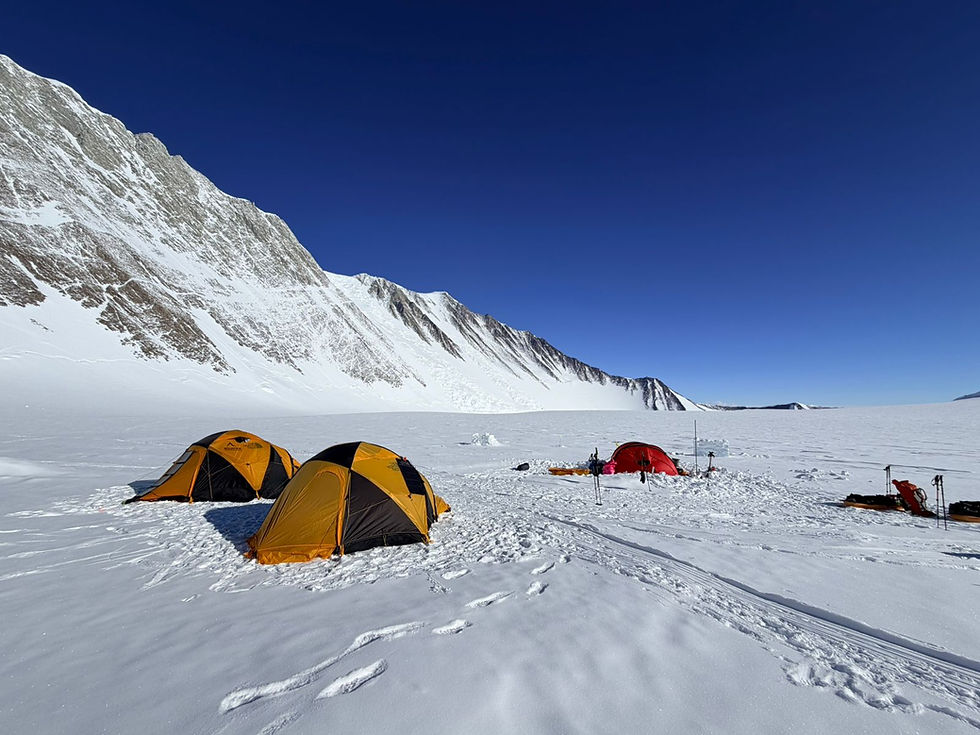
From there, it’s Twin Otters to Vinson base camp, where everything is buried under a metre of snow. First job? Dig. Dig up bloody everything.
Tents. Kitchen. Gear. All snow-covered, all need to be retrieved. Then load sleds, rope up, and start walking.
Another slightly surprising thing for Pierre is that distances aren’t measured in kilometres here. They’re measured in pee flags.
Every two or three kilometres, a yellow flag marks a “station.” It takes about an hour to reach each one. You haul roughly 25kg per person — some on your back, the rest on sleds — moving slowly, deliberately, roped together for crevasse safety. You go at the pace of the slowest person. Always.
Two days of this brings you to high camp, followed by steep fixed lines (up to 60 degrees in places) and temperatures that dip well below minus 30°C when the sun skirts the horizon.
Pierre slept in a minus-40 bag and still shivered. You don’t complain. You just wait for the sun to swing back and warm the tent.



A Quiet Summit Day
Vinson isn’t a big mountain, so the summit day arrived quietly.
No 2 a.m. alpine drama, no timing it for the perfect weather window. Vinson meant the team left camp around 8:30 in the morning, climbing steadily for ten hours round trip.
Pierre felt strong. Vinson sits just under 5,000 metres, and after Everest and having recently summited Aconcagua yet again, the altitude barely registered. The weather was perfect. Light breeze. Clear skies. Minus five in the morning, almost pleasant by Antarctic standards.
But while it was flying weather, agonisingly perfect flying weather, Antarctica said no.
Despite months of paperwork and 39 years of experience submitted, paragliding permission never came through. No final reason was given, but if one were to guess, it would be liability.
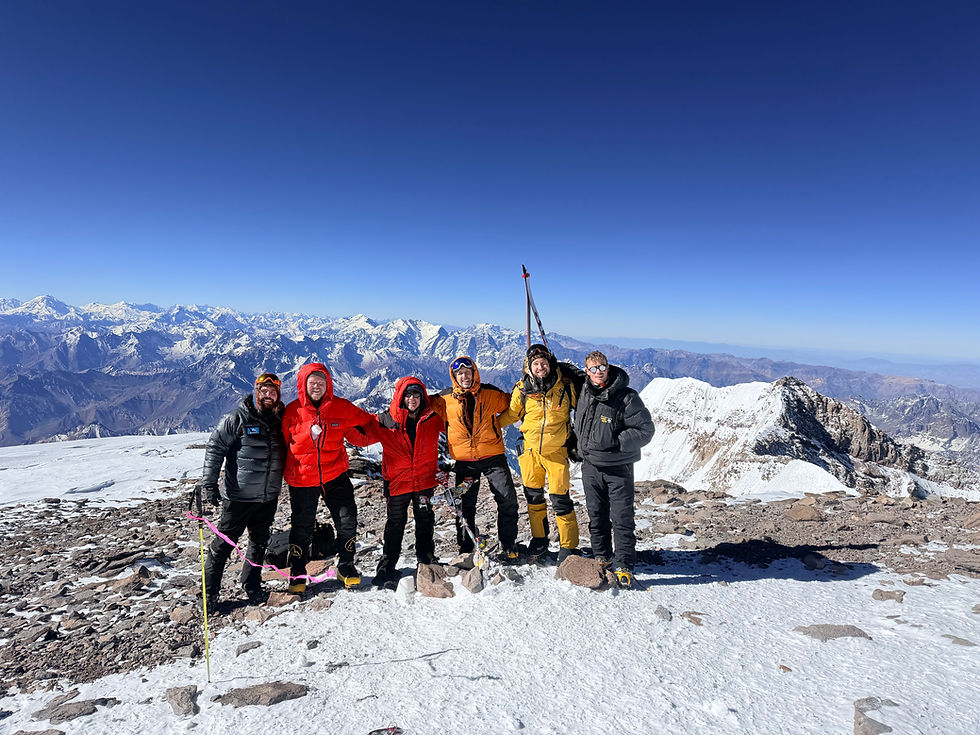
So Pierre stood on the final summit of his Seven Summits journey knowing he could fly… and also knowing he wouldn’t.
But that didn’t take away from the moment.
Standing alight the ice country that marks the final summit of his lifelong dream, Pierre was relatively calm and zen - as those who know him know only he can be.
His teammates cried. Big, tough adventurers sobbing into balaclavas. Pierre, true to form, took a few photos and simply thought about getting off the mountain. Preservation instinct kicks in fast at places like this.
Seven Summits.
Done and dusted.


What Makes Vinson Different
Back at camp, celebrations were simple: shared stories, hot food, and later — back in civilization — free beers at a roadside pub near Mendoza, signatures on walls, and that unmistakable post-expedition glow (mixed with a powerful alpine body odour).
So, what truly makes Vinson different?
There’s no life. No sound beyond humans. Even your sinuses clear up. Toenail fungus disappears. The air is so pure it feels medicinal, and you can clearly see 40 kilometers away.
It’s not dramatic like the Himalayas or chaotic like Denali. It’s just vast. Empty. Ancient.
And when he finally stepped off that summit ridge, the weight of nearly three decades of climbing, flying, dreaming, and stubborn persistence settled gently into place.
Seven continents. Seven summits. One hell of a journey.
And knowing Pierre? He’s already well into the planning phases of his next challenge.
“Seven continents. Seven summits. The circle finally closed in Antarctica.”


Comments