High-Altitude Paragliding Tips
The Technical Skills Every Big-Mountain Pilot Needs
Climbing a big mountain is one thing. Flying off it safely? That’s something else entirely.
It’s that strange moment on a summit when the lungs are working overtime, the fingers are numb, and your legs are heavy, where you unzip your pack, pull out a glider, and switch from mountaineer to pilot.
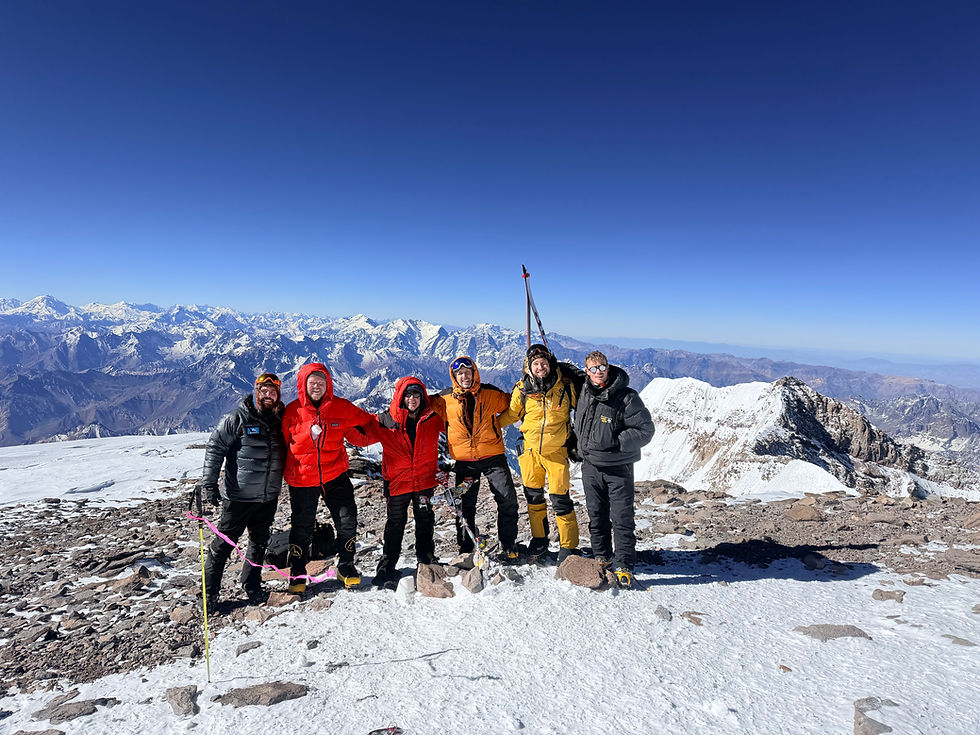
For Pierre Carter, this moment has played out across all seven continents. From the thin air of Everest to the icy silence of Antarctica, his 7 Summits 7 Flights journey has been less about chasing records and more about understanding one thing:
Where adventure meets risk — and how to manage it.
So what actually goes into safely flying off a mountain at 6,000… 7,000… even 8,000 metres?
Here’s Pierre Carter musing on the technical skills, the mindset, and the decisions that matter most.
Mountaineering Meets Paragliding
Q: What’s the biggest difference between climbing a mountain and flying off it?
“For me, flying off a big peak — if the margins are right — is actually safer than walking down.”
That might sound counterintuitive, but it highlights the core reality: you’re managing two completely different risk systems.
Climbing down comes with its own dangers: fatigue, weather shifts, poor visibility, and technical terrain.
Flying introduces another layer:
Wind direction and strength
Launch conditions
Wing behaviour in thin air
Your own mental sharpness at altitude
And the two don’t compete but rather overlap.
To do this well, you need:
Mountaineering awareness
Paragliding precision
And a mindset that constantly checks both
“You’ve got to know — do I have enough in the tank to walk down if I don’t fly?”
That question sits at the heart of every summit decision.

The Decision: Fly or Walk
Q: How do you decide when it’s safe to take off?
Pierre doesn’t rely on one big decision at the top.It’s a continuous internal check-in, starting from base camp.
“Am I comfortable? Am I in control? Am I warm? How’s my breathing? How’s my head?”
And just as importantly:
How are your teammates doing?
Is the weather building or stabilising?
Is the wind shifting direction?
These checks happen all the way up the mountain.
“We talk about it constantly as a group. You voice concerns. You don’t keep things to yourself.”
The key difference?
You can push slightly harder when climbing. But when flying, your margin for error shrinks fast.
Skills That Actually Matter
Q: What skills do you really need to hike and fly big mountains?
Pierre keeps it simple:
Solid mountaineering experience
Confidence moving through terrain
Strong weather awareness
Excellent ground handling
And one that many overlook:
“A good attitude — and the understanding that sometimes you walk down.”
Flying is never guaranteed. It’s a privilege.

Flying at Altitude: A Different Beast
Q: What changes when you’re flying at high altitude?
Quite a lot.
“The wing is more of a handful.”
At altitude:
The air is thinner
The glider inflates faster
Reactions are slower
Your brain is slightly behind your body
It’s a tricky combination.
“It can take a couple of launch attempts. The key is to let the glider fly — don’t stall it.”
This is where experience (and muscle memory) become everything.
Gear: Light, But Not Reckless
Q: How do you approach gear on big mountains?
It depends on the expedition.
With porters (like Kilimanjaro or Pakistan):
Full kit
Glider, reserve, pod harness
Possibly oxygen at extreme altitude
Solo or self-supported climbs:
“You go as light as possible.”
That means:
Lightweight gliders (under 2.5kg)
Minimal harness systems
Only essential gear
But there’s one non-negotiable:
“A glider you are confident on.”
No matter how light it is, if you don’t trust it, it doesn’t go.

Weather, Wind, and Waiting
Q: How do you read conditions on a summit?
It starts long before you arrive.
Weather apps
Forecast models
Observations on the way up
But at the top?
“It comes down to experience.”
And restraint.
“I err on the side of caution. If I’m not happy, I’ll wait. If it doesn’t improve — I walk.”
One of Pierre’s most telling stories comes from Aconcagua:
It was a perfect day. Clear skies. Not a breath of wind. They tried launching again and again, but…nothing.
His partner walked down.
But Pierre stayed.
“I gave myself until sunset.”
Hours passed. Still nothing. Then, just before sunset, a gentle upslope breeze arrived.
He launched.
“It was a beautiful flight.”
Sometimes, the difference between flying and not flying is simply waiting. It’s all about the waiting game, right?

Safety: The Rule That Says It All
Q: What safety systems do you follow?
Pierre doesn’t overcomplicate it.
It comes down to preparation, repetition, and instinct.
Checklists.
Muscle memory.
Clear thinking.
And one guiding principle:
“DFU — Don’t F* Up.”**
Simple yet effective.
Lessons from the Big Mountains
Q: What have the Seven Summits taught you?
Two things stand out:
“There is no ego at altitude.”
“And don’t get sick — it takes forever to recover.”
High mountains strip everything back. No shortcuts. No bravado. Just patience.
“Slow and steady catches the monkey.”

Advice for Aspiring Hike-and-Fly Pilots
Q: Your top advice for someone starting out?
Pierre’s answer is refreshingly practical:
Train properly→ Give yourself at least 12 weeks
Know your terrain→ Practice the skills you’ll need before you go
Keep it simple→ Especially your gear
“Too much equipment is one of the biggest mistakes people make.”
And perhaps most importantly:
“Be able to clip in blindfolded.”
Because at 7,000 metres…you might not be thinking straight.
More Than Just a Flight
Q: What does flying from a summit mean to you?
Pierre pauses here.
“It’s become a way of life.”
After nearly four decades of climbing and flying:
“If I don’t go out and fly… I feel like something is missing.”
But big mountain flights? They’re different.
“There’s something really special — almost spiritual — about climbing to a height and then launching from it.”
It’s not just about getting down. It’s about earning the moment.
Final Thoughts: Safety First, Always
You can’t control the mountain. And you definitely can’t control the wind.
But you can control:
Your preparation
Your mindset
Your decisions
And that’s what keeps you alive long enough to tell the story.
Because at the end of the day:
The summit is optional.
The flight is a privilege.


Comments