Climbing Aconcagua: The Full Scope
It was early December, and Pierre ventured from sunny South Africa to the snowscape of the South American Andes mountains for Paraglide Aconcagua's first-ever expedition.
Touching down in Mendoza after nearly 15 years felt a little surreal for Pierre. The town had clearly had a facelift, but thankfully, the good meat and warm Argentine hospitality hadn’t changed a bit.
There was also a silent sense of nerves in the air.
Pierre was returning to Aconcagua older, wiser, and carrying a few souvenirs from previous adventures, including a busted ankle and leg from years past. He wondered how his body would respond this time. Would altitude hit harder? Would heavy loads take their toll?
Turns out, it went better than expected.
“I thought I’d battle more. But I didn’t. The mountain met my expectations — hard, yes — but manageable.”


A New Route and a New Rhythm
This expedition was different from Pierre’s previous climbs. Now, he was guiding clients under the banner of Paraglide Aconcagua, instead of guiding himself up to break a world record.
An organised adventure meant that this time round, porters were involved, and although Pierre still carried his own loads, it led to a change of rhythm. Normally on Aconcagua, you acclimatize slowly: ferrying gear up, coming back down, resting, then climbing higher again. Now, it was relatively more laidback.
The weather also meant a change of plans was in order. A storm system began closing in, shifting the ideal flying window earlier than expected. Instead of the usual 15–20-day itinerary, the team had to move fast, compressing the entire climb into just 10 days.
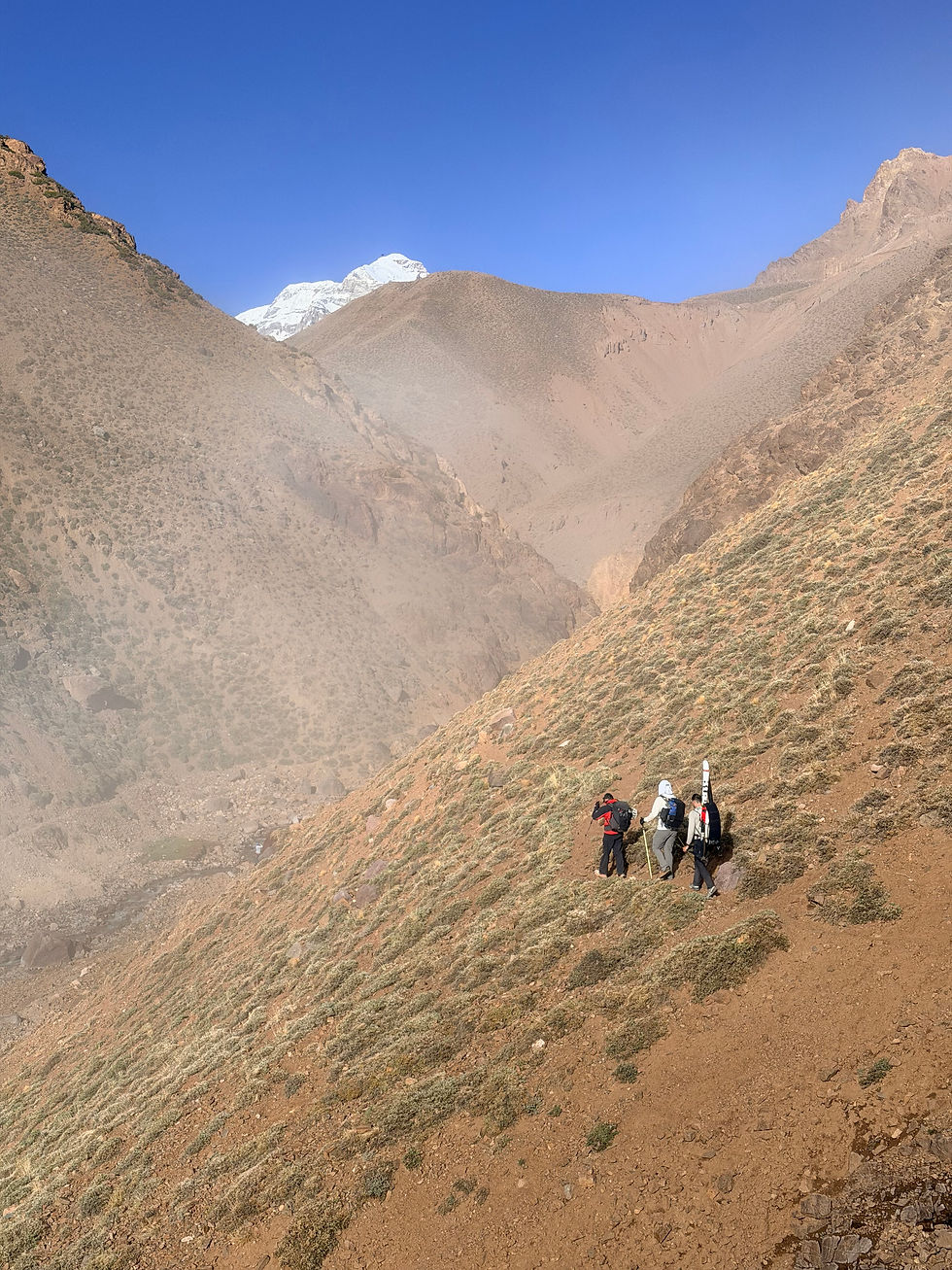
They followed a newer variation of the Polish route (sometimes referred to as the Polish 360). It’s a more sheltered approach than Pierre’s usual Polish Traverse, offering better protection from wind and cold, making it ideal for first-timers.
“It was actually really nice,” Pierre says. “Less exposed, warmer camps, and if you don’t fly, you exit a different way — you end up circumnavigating the mountain.”
The Team
The group was a great mix of ages and energy: Landon in his early twenties, Marshall in his thirties, Colby in his fifties, and Pierre edging toward sixty.
Different generations. Same goal.
Everyone gelled quickly. Spirits were high, legs were strong, and only one team member had to turn back due to altitude sickness at Base Camp (4,200m) — a reminder that altitude is never something to underestimate.
Above that, the remaining four continued upward together.


Life on the Mountain
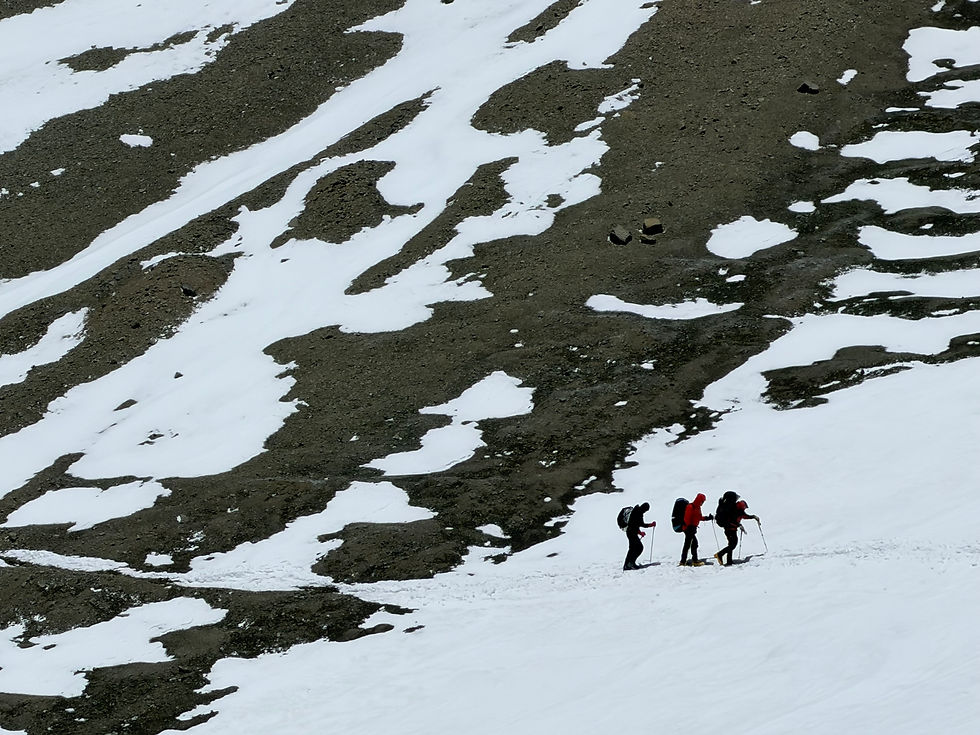
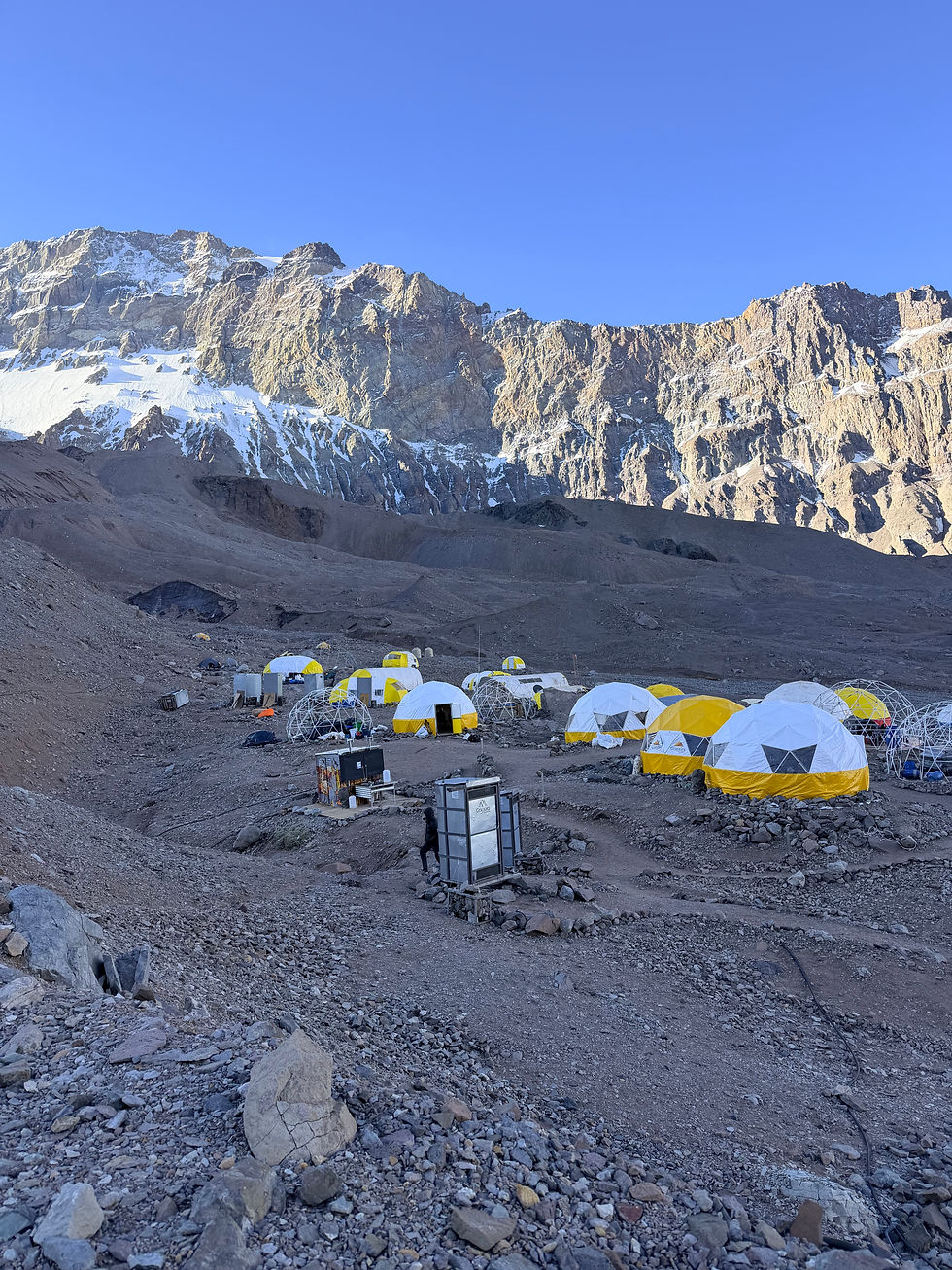
Aconcagua days follow a familiar rhythm: prep the night before, wake early, eat, check wind and weather, then move.
Camps are only about 4–5 km apart, but each step gains 800–1,000 meters of elevation — enough to keep lungs honest and legs burning.
After reaching high camp just as the storm arrived, the team spent a full day snowed in, which was a blessing in disguise. It gave everyone time to acclimatize properly.
And just as Pierre predicted, once the storm cleared, the mountain delivered.
Blue skies.
Almost no wind.
Perfect summit conditions.
Summit Day
They started early.
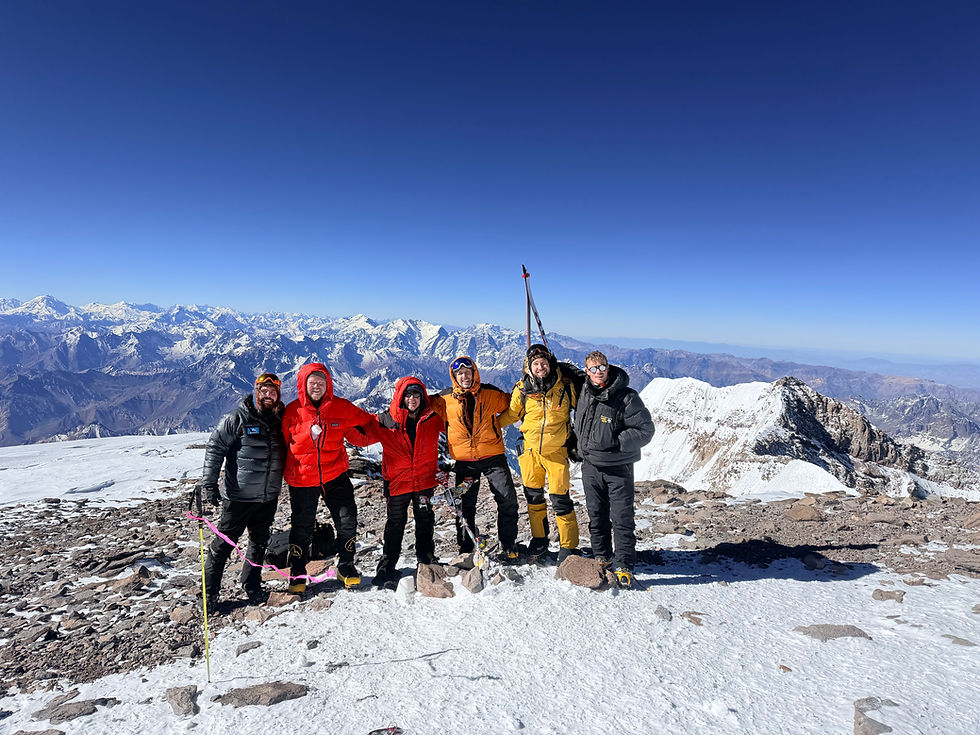
By Pierre’s count, it took roughly five hours to reach the summit, arriving around 8 am. Winds were a gentle 5 km/h, blowing straight up the south face. Just enough to inflate gliders without demanding a lung-busting run.
“It couldn’t have been better.”
So, one by one, the team launched.
All three clients got airborne, a moment Pierre describes as deeply special. Then he followed, carving smooth lines through calm mountain air, riding the invisible elevator all the way down to the road.
By 9 am, they were out of the park.
Summit to road in an hour. Not bad. Not bad at all.


Beers, Signatures, and a Proper Celebration
The landings brought them straight to a small gate-side pub, where the owner handed out free beers, asked them to sign his wall and guestbook, and helped mark the occasion.
Later that day, they shared a long lunch, swapped stories, and even squeezed in a local flight near Mendoza before everyone began heading home.
For Pierre, the highlight wasn’t just the flight but rather watching the three guys succeed, seeing their months of training and preparation pay off in a single, unforgettable glide.
“That was really special.”
Looking Ahead
Despite an ankle that’s still grumbling and knees asking for mercy, Pierre already has his eye on the future. Paraglide Aconcagua is planning another expedition for late 2027, and Pierre will likely be back wearing his mountain guide hat proudly.
Would he do anything differently?
“No. It all ran like clockwork. It’s just about timing and waiting for the right weather window.”
Another mountain. Another flight. Another reminder that patience is often the most important piece of gear.


Comments